|
The University of North Dakota's 550-acre wooded and landscaped campus, bisected by the scenic English Coulee, features 235 buildings containing 5.25 million square feet of space. The architectural style of the central campus includes classic to modern interpretations of the "collegiate Gothic" theme. The campus is admired for its spaciousness and beauty in all seasons, and particularly for its flowers in summer and fall.
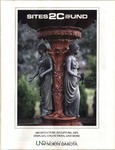
Adelphi Fountain
The first purely decorative fixture on campus, the fountain was presented to the University by the Adelphi Literary Society in 1908.
Aerospace Complex
The John D. Odegard School of Aerospace Sciences anchors the western side of campus and has earned international acclaim for innovation and achievement in aerospace education and atmospheric research. The futuristic architecture of the complex symbolizes the growth and new direction of the University. Among its features are flight and air traffic control simulators, an altitude chamber, an atmospherium, and a distance learning broadcast center. Tours are available.
American Indian Student Center
The 5,272 square-foot American Indian Center houses American
Indian Student Services and several American Indian student
organizations. The Center provides students with a place to gather, study, relax, or seek assistance with academic advisement, admissions, registration, financial aid procurement and tutorial support.
Babcock Hall
Constructed in 1908, Babcock Hall is the home of archaeology and anthropology. The arched entrance and checkerboard stone pattern at the entrance are favorite backdrops for photo shoots.
Burtness Theatre
The University's first permanent home for the performing arts, it was named in honor of Olger Burtness of Grand Forks, a district judge and six-term U.S. Congressman. Burtness Theatre hosts a regular schedule of mainstage and studio productions.
Camp Depression Tribute
The Camp Depression Tribute sculpture, constructed in 1996, is located across from Gillette Hall in the campus mall area. Curtis Flexhaug of Hillsboro, N.D., designed and built the sculpture, "Persistence," while earning his bachelor's and master's degrees here. Affixed to the brick surrounding the sculpture is a special tribute to the young men who lived in Camp Depression and showed great determination to earn their degrees. Camp Depression was a collection of eight railroad caboose cars purchased by UND to provide economical housing during the Great Depression. From 1933 to 1944, financially strapped students lived there and worked on campus.
Carillon Americana
The University's 305-bell electronic carillon is located in the Twamley Hall tower. Made by Schulmerich Carillons, Inc. of Sellerville, Pa., it is one of the largest and most versatile in existence. The 1963 gift of the late Edna Twamley, an alumna, it can be set to signal the hour of the day and plays anthems to help create an atmosphere of ceremony for special events, particularly commencement. The tone ranges from a whisper to a thunderous sound.
Carnegie Building
Built in 1907 with funds from the Andrew Carnegie Foundation, this was the University's first stand-alone library, which was formerly housed in Old Main. After the book collection outgrew the building, Carnegie became the University Commons and later housed the home economics department. Today, it is the home of Enrollment Services. Architect Charles Sedgwick used a number of classical Roman features, including a semi-elliptical arch resting on Ionic pilasters. The windows are highlighted by elaborate keystones and surrounded by stone work known as Greek keys.
Chester Fritz Auditorium
In 1965 alumnus Chester Fritz, an international investment banker, gave UND $1 million toward the construction of a "distinctive auditorium" on the campus. A matching appropriation of $1 million from the State of North Dakota and another million in private donations completed funding. Finished in 1972, the Chester Fritz Auditorium seats 2,300 and is ranked among the best performing arts facilities in the nation. The exterior is of orange Hebron rock-faced brick and pre-cast concrete, both made in North Dakota. Visitors enjoy viewing the large photo exhibitions featuring artists who have performed at the Fritz over the years.
Chester Fritz Library
The largest library in North Dakota, the building is distinguished by the 82-foot tower facing University Avenue. The original building was made possible by a gift from Chester Fritz, UND alumnus and international investment banker. Over 60 pieces of art, including regional photography, paintings, tapestries, and posters grace the Library's walls. A printed guide is available at the reference desk on the second floor. Two significant works of art were commissioned specifically for the Library's dedication in 1961: a stained glass and metal sculpture designed by Stanley Johnson and a large oil mural depicting symbols of North Dakota's heritage, painted by Robert Nelson, UND visual arts chair from 1960 to 1972. Both works are located in the Reading Room on the second floor. Vases, tapestries, wall hangings, furniture, and other objects are displayed in the East Asian
 |
Room on the fourth floor. Most of the items were acquired by Chester Fritz and his family. The items may be viewed upon request Monday through Friday, 8 a.m. to 4:30 p.m. Make requests through the Department of Special Collections on the fourth floor.
A display of one of the finest stamp collections in the Midwest is located on the second floor. Donated by State Senator Bryce Striebel of Fessenden, N.D., the collection contains more than 400 albums and thousands of stamps. Highlights of the collection include the world's first postage stamp, America's two most important stamps, and complete collections of rare series. Inquiries about the stamp collection should be made at the Library's administration office on the second floor.
Family historians will delight in the genealogical resources available in the Elwyn B. Robinson Department of Special Collections on the fourth floor. More than 1,000 Norwegian bygdeboks with histories of hundreds of Norwegian settlements are housed here, as are manuscript collections and other historical documents. Immediately outside the entrance to Special Collections is a display of Chinese clothing given to the Library by Douglas Erickson. Hours are 8 a.m. to 5 p.m. weekdays. During academic terms, the Department of Special Collections is open on Wednesday until 9 p.m.
Energy and Environmental Research Center
Anchoring the east side of campus, the EERC is among the world's leading laboratories developing clean, efficient energy technologies. This research, development, demonstration, and commercialization facility is dedicated to moving technology out of the lab and into the marketplace.
English Coulee Vista
A portion of the 30-mile-long English Coulee winds through campus as it nears the Red River. A popular biking/walking path parallels it through the north campus. A favorite of alumni, students and visitors alike, the vista on the main campus is one of the most-photographed spots in eastern North Dakota.
Fox Memorial Bridge
The Fox Memorial Bridge, spanning the English Coulee on the campus, was constructed in the fall of 1965, replacing a wooden structure. It is named in memory of Alice C. Fox, wife of E.F. Fox of Billings, Mont. The concrete-and-steel bridge is 72 feet long and illuminated by 14 globe lights. Architect Mark B. Foss of Fargo, a University alumnus, contributed the plans and specifications, and W.I. Swingen, another UND graduate, built the structure.
Gamble Hall
The home of the College of Business and Public Administration, Gamble Hall was constructed in 1969. The benches in the portico patio provide a favorite spot for visiting. The decorative stonework and insets near the entrance of the building represent a computer card and keypunch code, once used for programming purposes.
Gustafson Hall
Originally constructed as the home of the Varsity Bachelor Club, this 1908 building later became the home of Phi Delta Theta fraternity and was likely the location of the first private dancing party on campus in 1910. It now houses the Division of Continuing Education. Overlooking the English Coulee, the Tudor Revival building boasts gables, patterned brickwork, and other decorative elements.
Hughes Fine Arts Center
This architecturally innovative structure houses the music and art departments. It features a recital hall, rehearsal rooms for music, specialized art studios, the Col. Eugene Myers Art Gallery, and a display of nationally renowned UND pottery.
International Center
This facility provides a gathering place for the University's international students and hosts weekly programs on the food, music, and culture of different nations. Attached is the Lotus Meditation Center.
J. Lloyd Stone Alumni Center
Designed by Joseph Bell DeRemer as the president's residence, the building was first occupied in 1903 by Webster Merrifield and his wife, Cream of Wheat heiress Elizabeth Bull. After 1954, when a new president's residence was built, it was used as a dormitory and later housed the art department. Fully restored in 1981, it now houses the UND Alumni Association and Foundation. Beautifully furnished in turn-of-the-century antiques and d�cor, it is a favorite location for receptions and special events. Tours are available.
Law School
This 1923 building is impressive inside and out. It seems taller than its four stories, and Gothic arches, gables, and peaks add to the impression of height. Inside, note the terrazzo floors and fourth-floor vaulted courtroom. A contemporary library addition, highlighted by a "wall of windows," complements the classic architecture.
Leonard Hall
Follow the dinosaur tracks to Leonard Hall, home of the geology and geological engineering department. On the main floor lobby are a 70-million-year-old skull of a triceratops and an extensive exhibition of fossils, rocks, and minerals. The lobby walls feature stones from the Lake Agassiz glacial plain. The exterior walls of the building feature inset cast concrete representations of dinosaurs, a mammoth, and a volcano.
Medical School Complex
The School of Medicine and Health Sciences is located in the former St. Michael's Hospital, which was built in 1951. Additions and remodeling have allowed the building to grow with the School as it has increased both teaching and research capacities. An open courtyard in the center of the building and a formal entrance with columns and portraits welcome visitors. Other buildings in the complex include the Biomedical Research Center and the Neuroscience Research Facility.
Merrifield Hall
Constructed in 1929, Merrifield Hall was designed by architect Joseph Bell DeRemer, who became nationally known for his Art Deco and Art Modern style. He designed a number of buildings on campus and was one of two architects who designed the North Dakota State Capitol. Merrifield Hall is known for its elegant look and the shield-like designs on the arched portals and north and south ends. Inside, note the original terrazzo floors, curved staircases with window seats and book-reading gnomes.
Memorial Union
The center of campus life, this building is identified by the long canopy over its entrance facing University Avenue. It houses the Info Center (701-777-4231), an extensive food court, coffee shop, the Sign and Design Studio, student government and student organization offices, a convenience store, meeting rooms, and the Lifetime Sports Center. You can cash a check, mail a package, pick up stamps, photocopy, make buttons, buy athletic and discount movie tickets, get parking permits, and more.
Multicultural Student Services
Multicultural Student Services (MSS) Program, housed in the Era Bell Thompson Cultural Center, provides quality support services (academic, financial aid, personal and social) to enhance African American, Asian American, and Hispanic American student success at the University. Located at 2800 University Avenue, the Center provides a comfortable gathering place, a full-size kitchen, lounge area, cable TV, computers, and a conference room. Everyone is welcome.
North Dakota Museum of Art
Located in the former "Women's Gymnasium," the North Dakota Museum of Art features contemporary art and American Indian art, as well as a popular coffee shop and caf�. Richard Nonas, a New York city sculptor, was commissioned in the early 1990s to create the circle of 40 charcoal-granite rocks that surrounds the Museum. His charge was to make a public space that would identify the 1907 building as a contemporary art museum. He was also asked to incorporate a specimen peony garden into the installation. The three stone boulder/benches behind the museum are part of an installation named "Couch Potatoes" by sculptor Zoran Mojsilov. In front of the museum is "Raindrops," a sculpture of a young Navajo woman and her lamb created in 1993 by Allan Houser.
Old Main Memorial Plaza
Located between Twamley and Merrifield Halls, the plaza commemorates Old Main, the first building on campus. The Old Main Memorial Sphere, created by artist and UND art professor Stanley Johnson, represents the eternal quest for knowledge. Supported by four 16-foot-high steel posts, the iron globe is laced with 29 figures representing educational development. An eternal flame burns in the center of the sphere. Engraved on the bronze star beneath the sphere are the names of the eight UND presidents who served in Old Main, a representation of the building, and four lines of UND's anthem, "Alma Mater."
Ralph Engelstad Arena
The $100 million arena, home to the seven-time national champion Fighting Sioux men's hockey team and the women's hockey team, is one of the finest arenas in North America. Built by alumnus and former hockey player Ralph Engelstad, the 400,000-square-foot arena holds 11,500 fans. All concourse floors are granite, and each seat is constructed of leather and cherry wood. There are 48 luxury suites and two club rooms featuring the longest freestanding bars in the state. A training facility features a 10,000-square-foot weight room and underwater treadmill, 14 locker rooms, an extra Olympic ice sheet, and the Betty Engelstad Sioux Center for basketball and volleyball. The statue at the entrance to the Arena depicts a Sioux warrior on horseback. Tours of the building are available during business hours.
Skalicky Tech Incubator and Ina Mae Rude Entrepreneur Center
Completed in 1996 and 2004, respectively, this complex houses the Center for Innovation, units of the Division of Continuing Education, and the UND Television Center, as well as "incubators" for entrepreneurs. The Entrepreneur Center is known for its striking artwork.
Smith Hall Sculpture
The granite sculpture, made in 1971 by artist and art professor Stanley Johnson, weighs 11 tons and stands 20 feet high. Its base measures four feet by six feet. According to Johnson, the work did not express any particular theme but was instead an exercise in design, "with a feeling for positive lines becoming negative."
Soaring Eagle Statue and Prairie
American Indian artist and alumnus Bennett Brien completed this sculpture in 2004 through the support of alumnus Col. Eugene E. Myers. Horticultural designer/environmental historian Kathleen Brokke designed the Soaring Eagle Prairie flowerbeds. With emphasis on a circular pattern rather than straight lines and rows, the flowing triangular bed is 80 feet on a side, showcasing plants from the prairie that originally covered the area.
Wellness Center
This new, state-of-the-art $20 million, 106,000-square-foot facility, completed in 2006, includes a three-court gymnasium, multi-activity court, cardiovascular and weight rooms, a 200-meter running track, and climbing and bouldering walls. It's second only to its neighbor, the Ralph Engelstad Arena, as the single-largest structure ever built at UND.
 |